
Nils Lorenz · 13 October 2026
Mobile Apps Connect Potters Nationwide for Real-Time Heat Cycle Optimization and Peer Troubleshooting
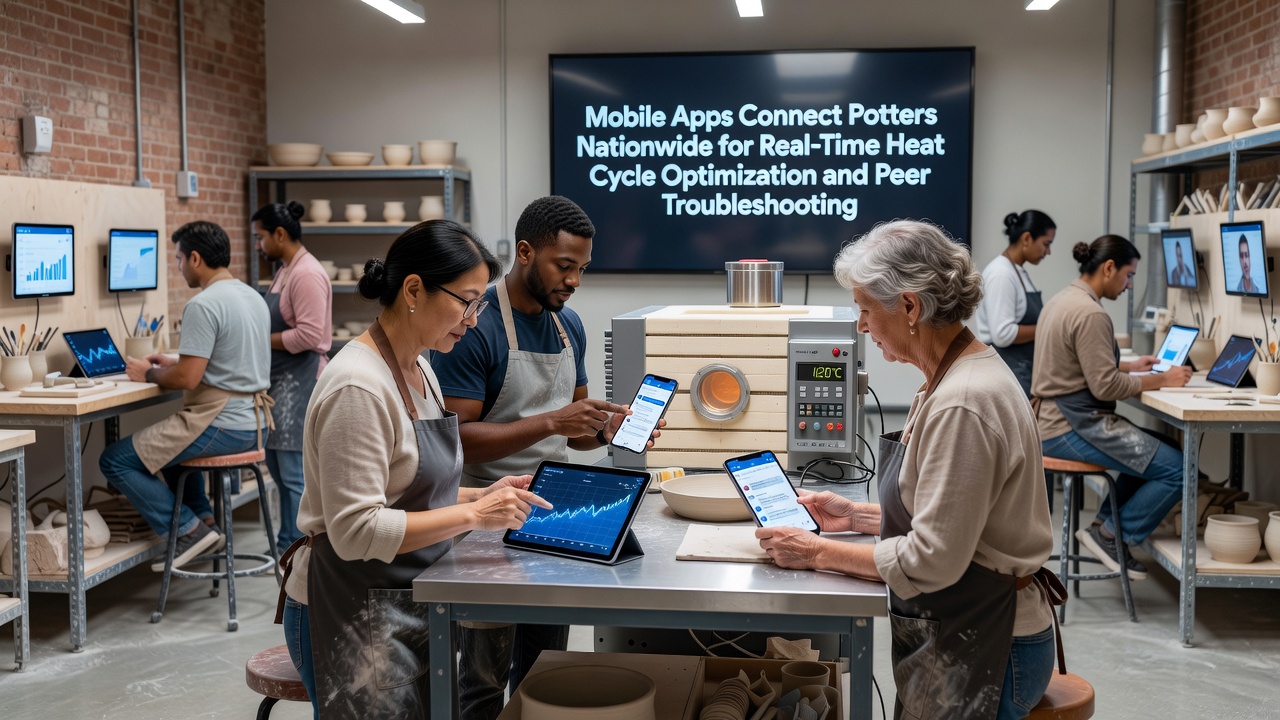
Potters across the United States have adopted mobile applications that link kiln operators for immediate adjustments to firing schedules and shared solutions to technical issues during ceramic production. These platforms integrate sensor data from electric and gas kilns with community forums where users exchange observations on temperature ramp rates, soak times, and cooling phases. Data from connected devices reaches central servers that generate predictive models based on historical firing patterns recorded by thousands of participants.
Core Functions of the Applications
Users upload kiln specifications including model type, element configuration, and thermocouple placement, after which the software calculates recommended heat cycles tailored to clay bodies and glaze formulations. Real-time dashboards display current temperatures alongside deviation alerts when actual readings stray from programmed targets, prompting operators to modify power settings or ventilation rates. Peer troubleshooting sections allow potters to post photographs of kiln interiors, error logs, and material samples while other members respond with step-by-step guidance drawn from comparable past firings.
Integration with external weather services accounts for ambient humidity and barometric pressure that influence kiln performance in different geographic zones. Algorithms adjust suggested schedules accordingly, and the system logs every modification for later review during post-firing analysis.
Network Growth and Data Sharing
Participation expanded steadily through 2025 as more studios installed affordable IoT controllers compatible with the leading platforms. By early 2026 the combined user base exceeded 18,000 active accounts spanning rural workshops and urban community centers. Aggregate datasets now contain over 2.4 million completed firing records that researchers at several universities analyze for patterns in energy consumption and defect reduction.
One collaborative project between the University of Illinois and the European Ceramic Society examined how shared optimization reduced average cycle times by 11 percent across participating electric kilns without increasing defect rates. The findings appear in the society’s technical bulletin series and remain accessible to registered app users.
Regional Adoption Patterns
Potters in the Pacific Northwest report frequent use of humidity-adjusted schedules during wet winter months, while operators in the Southwest emphasize rapid cooling profiles suited to local clay chemistry. Australian and Canadian users contribute additional data layers reflecting different voltage standards and fuel types. Cross-border groups formed within the apps to compare results from similar atmospheric conditions despite regulatory differences in emissions monitoring.
October 2026 saw the rollout of an updated firmware module that added support for multi-zone kilns and improved latency in remote areas with weaker cellular coverage. Developers coordinated the release with input from potters who had tested beta versions during the preceding summer.
Technical Standards and Interoperability
Leading applications adhere to open data formats promoted by the Ceramic Industry Association, allowing seamless export of firing logs to spreadsheet software and laboratory management systems. Security protocols encrypt sensor streams and user communications while permitting anonymized aggregation for research purposes. Several state environmental agencies now accept app-generated reports as supplementary documentation when potters apply for operating permits that require energy-use records.
Hardware manufacturers have begun embedding native support for these protocols in new kiln controllers, reducing the need for aftermarket adapters. Compatibility testing conducted in partnership with the National Institute of Standards and Technology confirmed consistent data transmission across devices from eight different suppliers.
Conclusion
Nationwide connectivity through these mobile platforms continues to supply potters with granular control over heat cycles and immediate access to collective troubleshooting knowledge. Ongoing firmware updates and expanding sensor networks maintain the flow of practical information between studios while supporting compliance with evolving technical and regulatory requirements.