Nils Lorenz · 27 October 2026
Pottery Collectives Deploy Crowdsourced Data Platforms to Streamline Shared Kiln Scheduling Across Remote Villages
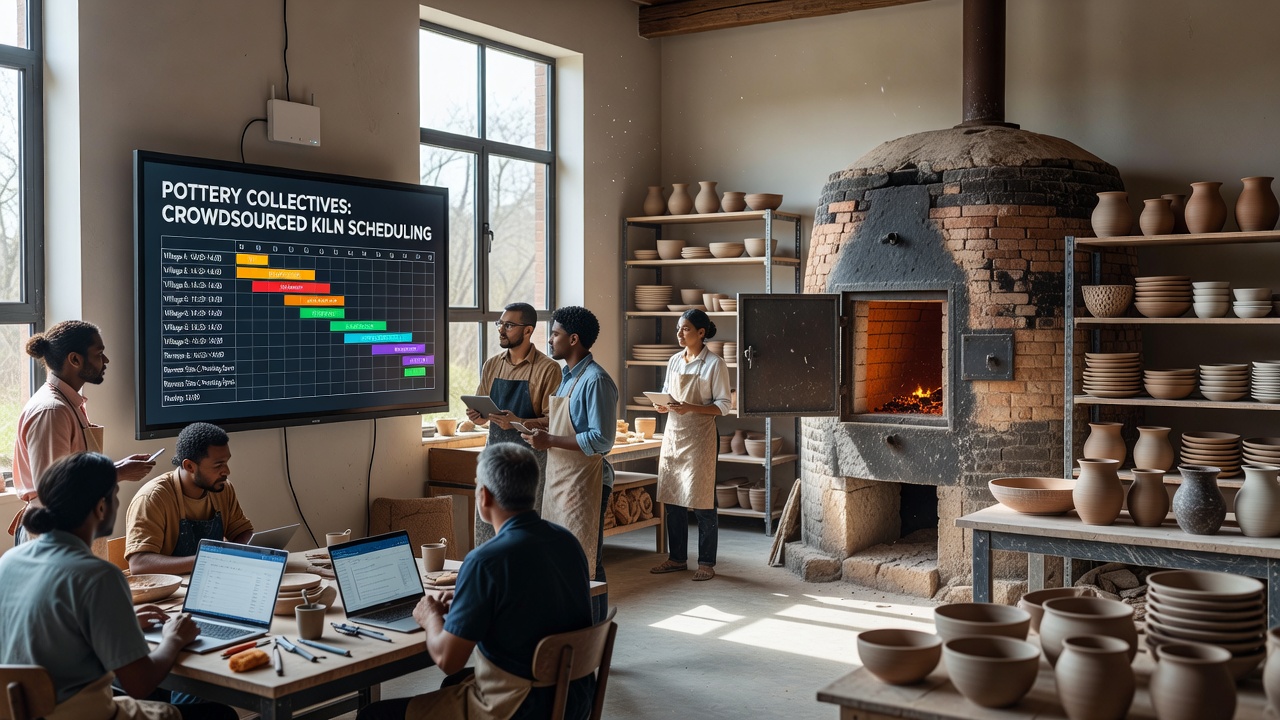
Pottery collectives in remote villages have started adopting crowdsourced data platforms that coordinate kiln access through shared digital calendars and real-time availability updates, and these systems draw input directly from participating potters who log firing cycles, temperature targets, and maintenance needs. The platforms aggregate anonymized usage patterns while allowing users to reserve slots weeks ahead, which reduces conflicts over equipment that often sits idle in one location while another village runs back-to-back loads. Observers note that the approach builds on earlier community bulletin systems yet adds layers of predictive analytics that estimate energy consumption and suggest optimal grouping of similar clay bodies or glaze firings.
Platform Mechanics and Data Inputs
Users contribute details such as kiln capacity, fuel type, and typical ramp rates, then the software matches requests by factoring in travel distance between villages and current stock levels of prepared ware. Data shows that once a collective reaches fifty active contributors the matching accuracy improves sharply because the algorithm learns seasonal patterns like higher demand during spring glaze formulation periods. In practice a potter in one hamlet can see that a neighboring kiln will finish a bisque cycle at 3 a.m. and claim the subsequent stoneware slot without needing to place phone calls or visit in person.
Regional Rollouts and October 2026 Milestones
By October 2026 several networks spanning the Scottish Highlands and rural Tasmania reported synchronized schedules across twelve sites each, with average wait times for kiln access dropping from nine days to two. Those who studied the deployments found that the platforms also track refractory wear and automatically flag when a kiln requires a new element or shelf replacement, tasks previously handled through informal verbal handoffs. Figures from participating groups reveal that coordinated firing reduced total fuel use by eighteen percent in the first year because fewer half-empty loads were run.

Integration with Traditional Techniques
Collectives have preserved wood-fired and pit-firing traditions while layering digital coordination on top, so a village that maintains an anagama can still schedule its long multi-day burns around shorter electric-kiln runs elsewhere. Researchers at the University of British Columbia documented how one network in coastal British Columbia combined the platform with local tidal data to time wood deliveries, and the resulting report notes that transportation costs fell because groups consolidated shipments. Yet the same study cautions that connectivity gaps in the most isolated hamlets still require offline modes and occasional radio relays.
Challenges in Data Quality and Participation
Early adopters encountered inconsistent entries when some potters recorded target temperatures but omitted actual peak readings, which skewed the predictive models until the interface added mandatory confirmation fields. Training sessions held in community halls have helped standardize input practices, and participation rates climbed once collectives tied the platforms to existing material-sharing cooperatives. Data indicates that groups with higher percentages of younger members adopted the tools faster, while older practitioners often delegated logging duties to apprentices who already carried smartphones during studio time.
Broader Network Effects
Cross-village visibility has also surfaced surplus capacity that was previously invisible, allowing a collective short on bisque space to borrow time from a site thirty kilometers away rather than delaying production. One study from the Australian Centre for Rural Ceramics found that such borrowing arrangements increased overall output by twenty-three percent without requiring new kiln purchases. What's interesting is how the same data streams now feed into grant applications that demonstrate measurable efficiency gains to regional arts councils. Observers have seen similar patterns emerge in parts of northern Sweden where reindeer-herding communities run seasonal pottery workshops and need to coordinate around migration schedules.
Conclusion
The deployment of crowdsourced scheduling platforms continues to expand as more remote pottery groups recognize the value of pooled data for managing shared infrastructure, and ongoing refinements focus on multilingual interfaces and lower-bandwidth versions suitable for areas with intermittent satellite coverage. Evidence from multiple regions shows that the systems support rather than replace longstanding communal decision-making processes, while delivering concrete reductions in wait times and resource waste. As adoption widens through 2027 and beyond, the platforms are expected to incorporate additional variables such as electricity pricing forecasts and carbon accounting tied directly to each firing cycle.