Nils Lorenz · 29 September 2026
Regional Networks Help Clay Producers Overcome Material Shortages While Preserving Age-Old Firing Traditions
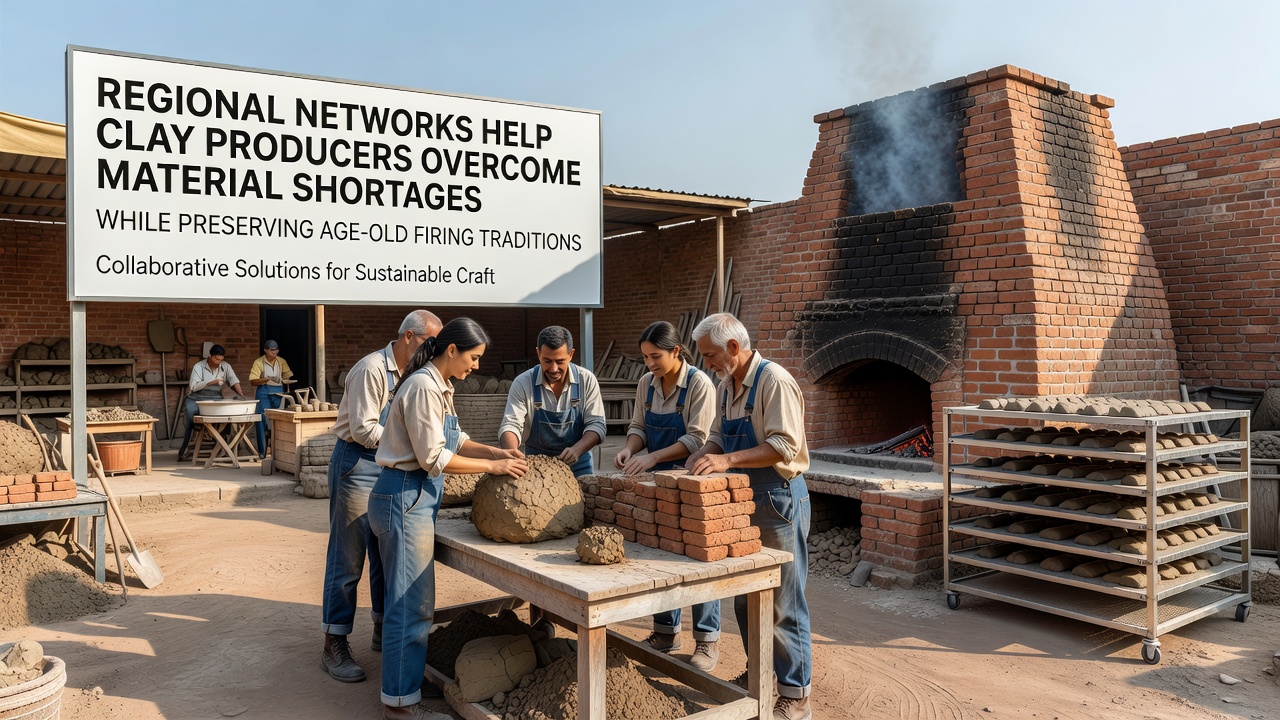
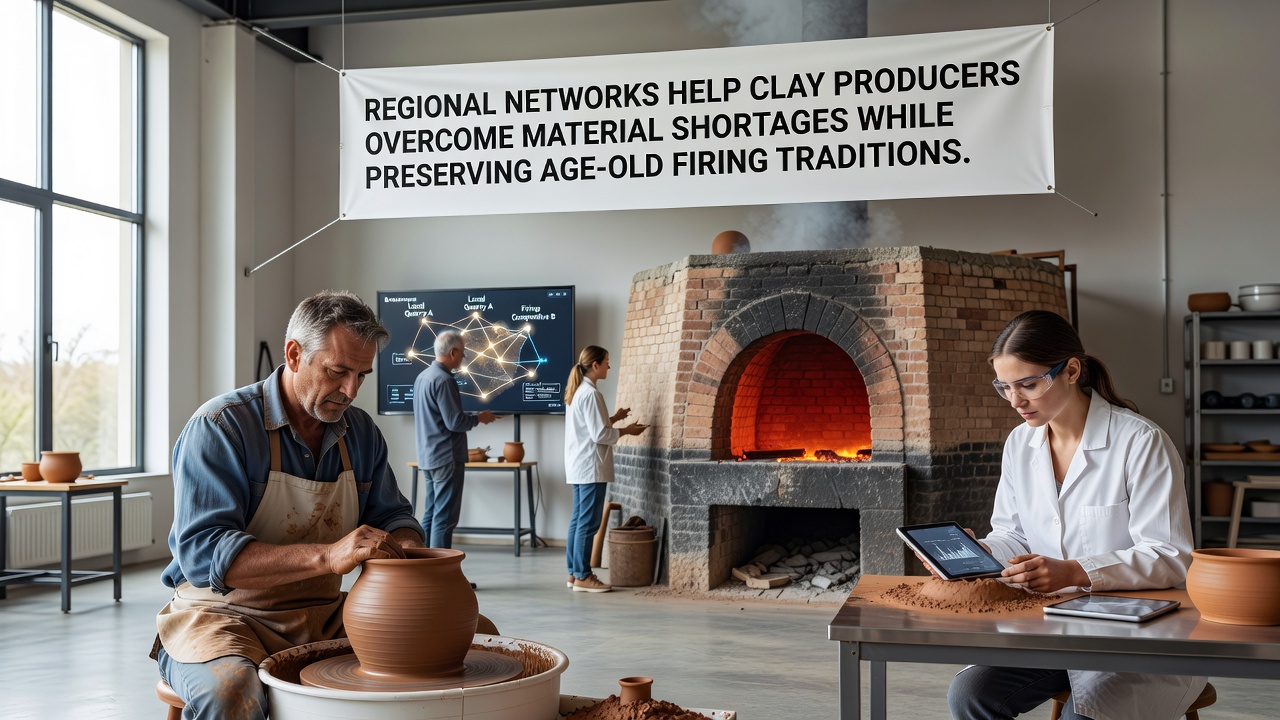
Clay producers across multiple regions have formed interconnected networks that address ongoing material shortages by coordinating local resource exchanges while maintaining established firing methods such as wood-firing and salt-glazing. These networks operate through shared databases that track available clay deposits and alternative materials, allowing participants to source supplies without disrupting production schedules that depend on specific firing temperatures and atmospheres.
Material Shortage Patterns and Regional Responses
Supply chain disruptions have affected access to high-quality ball clays and kaolins since the early 2020s, with data from geological surveys indicating reduced yields from several major extraction sites in Europe and North America. Producers responded by establishing regional hubs where potters and industrial operators exchange surplus materials, and this approach gained momentum through 2025 as shortages persisted into the following year.
Participants in these networks report that local partnerships enable them to locate substitutes such as river sediments or recycled brick grog that perform similarly during firing cycles reaching 1300 degrees Celsius. Coordination occurs via digital platforms that update availability in real time, reducing the need for long-distance transport that previously increased costs and carbon emissions.
Preservation of Traditional Firing Techniques
Wood-fired kilns and anagama-style structures continue to operate within these networks because members prioritize techniques that require specific clay compositions resistant to thermal shock. Network agreements include guidelines for material testing that ensure substitutes meet the same shrinkage and vitrification standards as traditional stocks, thereby sustaining the visual and structural qualities associated with age-old methods.
Training sessions held at shared facilities allow newer members to learn kiln loading patterns and stoking sequences that have been documented over generations. In one documented case from the Midlands region, a collective of five workshops pooled resources to maintain a communal wood-fired kiln that fires every six weeks, preserving both the equipment and the associated knowledge base.
Events and Data Sharing in September 2026
Scheduled gatherings in September 2026 will focus on expanding these networks into additional territories, including parts of Scandinavia and the Pacific Northwest. Organizers have compiled reports showing that participating groups reduced material procurement delays by an average of 35 percent during the prior twelve months, according to records maintained by the International Ceramics Association.
Workshops at these events demonstrate how to adapt local clays for use in cross-draft kilns without altering established glaze recipes. Attendees examine case studies from Australian producers who integrated regional networks with government-supported resource mapping projects to identify viable clay alternatives.
Broader Industry Integration
Industry organizations have begun incorporating network data into larger studies on sustainable ceramic production. Figures released by the United States Geological Survey link these collaborative efforts to stabilized supply volumes for specialty clays used in both artistic and technical applications. Academic researchers from institutions in Canada and the EU contribute analyses that track how network models affect firing emissions and energy consumption across different kiln types.
Producers note that the system supports continued use of techniques such as pit firing and barrel firing in areas where commercial clay supplies remain limited. By rotating material contributions among members, networks maintain consistent quality while respecting the seasonal availability of natural resources.
Conclusion
Regional networks continue to evolve as producers refine methods for material verification and knowledge transfer. Data collected through these groups provides evidence that coordinated local action can sustain both production output and the firing traditions that define regional ceramic identities. Future expansions planned for late 2026 aim to connect additional communities while documenting outcomes through standardized reporting protocols.